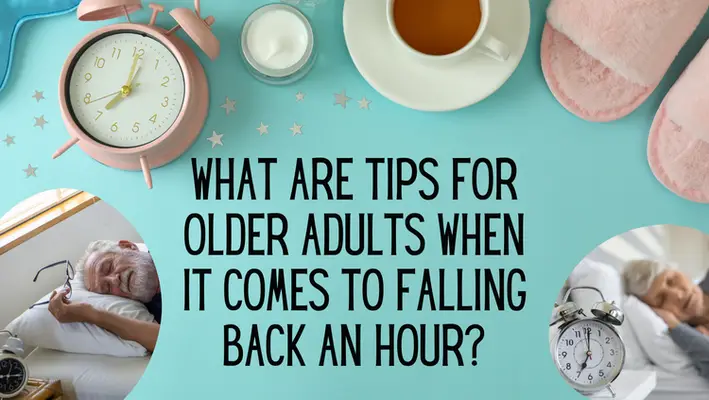
> Keep a regular routine
> Eat your meals at the regular time
> Keep busy and get natural sunlight
> If you don’t normally nap, don’t start napping if you feel more tired with the time change
> Stay with taking medication at the same time
(Hess, 2022)
> Keep away from items that disrupt sleep, such as caffeine and alcohol
> Participate in cardiovascular activities in the late afternoon or early evening
> Implement good sleep hygiene. For example, identifying if it’s cool enough, dark enough, and quiet enough
(Botek, 2022)
Also keep in mind that individuals with Alzheimers may have additional disorientation around time change. Continue to attempt to stick to a normal routine, to avoid any additional disorientation.
(Botek, 2022)
Resources Utilized:
- Hess, R. (2022, March 3). How does daylight savings time impact older adults? Baldwin House Senior Living. Retrieved November 1, 2022, from https://baldwinhouseseniors.com/2022/03/03/how-does-daylight-savings-time-impact-older-adults/
- Botek, A.-M. (2022, March 10). 5 tips for coping with the effects of Daylight Saving Time. AgingCare.com. Retrieved November 1, 2022, from https://www.agingcare.com/articles/daylight-saving-time-health-156410.htm