
Occupational Therapy (OT) is defined by the Occupational Therapy Practice Framework as “the therapeutic use of everyday life occupations with persons, groups, or populations for the purpose of enhancing or enabling participation” (AOTA, 2020). Occupational therapy (OT) focuses on helping individuals achieve independence in their daily activities, and home modifications play a crucial role in this process. Here’s how they intersect:
Goals of OT and Home Safety Assessments and Modifications
- Enhance Safety: Modifications can reduce fall risks and create a safer environment for individuals, especially the elderly or those with disabilities.
- Increase Accessibility: Adjustments can make it easier for individuals to navigate their homes, such as installing ramps or widening doorways for wheelchair access.
- Promote Independence: Modifications like grab bars in bathrooms or lever-style door handles allow individuals to perform daily tasks more easily.
- Support Rehabilitation: OT can help determine which modifications will best support a person’s recovery after injury or illness, facilitating smoother transitions back to daily life.
Common Home Safety Modifications
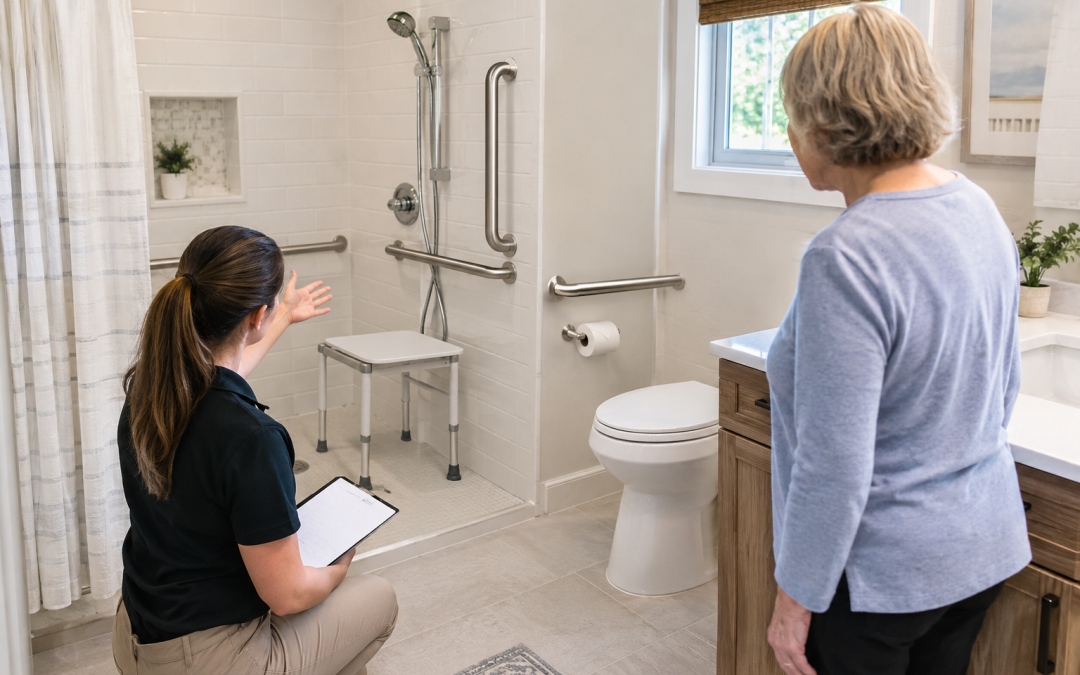
- Bathroom: Grab bars, non-slip mats, raised toilet seats, and walk-in showers.
- Kitchen: Adjustable countertops, pull-out shelves, and accessible storage.
- Living Areas: Clear pathways, rearranged furniture for easier movement, and lighting adjustments.
- Entrances: Ramps, wider doorways, and automatic door openers.
OT Home Safety Assessments
An occupational therapist will typically conduct a home safety assessment to identify specific needs, challenges, and potential modifications. This process often involves:
- Evaluating Current Functioning: Understanding how an individual interacts with their environment.
- Identifying Barriers: Recognizing obstacles that hinder daily activities.
- Collaborating with Clients: Discussing goals and preferences for modifications.
Conclusion
Occupational therapy uses a client-centered approach so each home safety assessment and modifications are made to the individual’s environment to ensure safety within the home so individuals can age in place. Home safety modifications are essential tools in occupational therapy, enabling clients to live more comfortably and independently. By tailoring changes to individual needs, OTs can significantly improve quality of life. https://hometherapysolutionsnd.com/services/specialty-services/
Resources
American Occupational Therapy Association. (2020). Occupational therapy practice framework; Domain and process (4th ed.).