
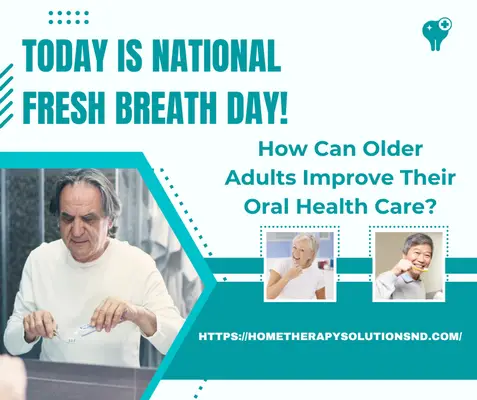
Oral health concerns that older adults may deal with are:
-Tooth decay
-Gum disease
-Tooth loss
-Oral cancer
-Individuals with chronic diseases, such as COPD, diabetes, arthritis, and heart disease, may be more likely to develop gum disease
(Centers for Disease Control, 2021)
How can older adults decrease oral health concerns?
-Brush and floss teeth every day
-See the dentist regularly – ask your dentist how often they advise you to come in for a check up
-Look for changes in your mouth, such as, lumps in your mouth, lip, or throat, trouble chewing, swallowing, or moving your jaw/tongue, swelling in your jaw, pain in your ear without hearing loss, a white or red patch in your mouth, or a spot in your mouth, lip, or throat that feels uncomfortable or sore
-Cut down on sugary foods or drinks
-Don’t use chewing tobacco and don’t smoke cigarettes
-If you drink alcohol, drink one drink or less a day
(OASH, 2022)
If an older adult has a difficult time with oral care, due to difficulty with range of motion, strength, or overall independence with their daily routine, talk to our therapists at Home Therapy Solutions. We can evaluate you, or your loved one, and provide in-home therapy services to assist with increasing you, or your loved ones, independence. 218-230-2171
Resources Utilized:
1. Centers for Disease Control and Prevention. (2021, May 5). Older Adult Oral Health. Centers for Disease Control and Prevention. Retrieved August 6, 2022, from https://www.cdc.gov/oralhealth/basics/adult-oral-health/adult_older.htm#:~:text=About%202%20in%203%20(68,or%20older%20have%20gum%20disease.&text=Tooth%20loss.,65%2D74%20(13%25)
2. OASH. (2022, June 1). Oral Health for older adults: Quick tips. MyHealthfinder. Retrieved August 6, 2022, from https://health.gov/myhealthfinder/doctor-visits/regular-checkups/oral-health-older-adults-quick-tips