
This post is part of our Vital 8 Healthy Aging Series — a blog series exploring the key areas of health that shape how well we age, and what we can do about them today.
Vital 8 Healthy Aging Series — Part 2
Your Brain Is Changing Right Now. Would You Know?
By Kara Welke, OTD, OTR/L, CLT & Jada Welke, OTD
By the time someone is diagnosed with mild cognitive impairment or dementia, the brain has been changing for years — sometimes decades. Most older adults living with dementia have never been formally diagnosed. The changes go unnoticed. The opportunities for early support get missed. And by the time someone ends up in a clinic or emergency room, the window for the most effective interventions has narrowed significantly.
We are catching cognitive decline too late. It does not have to be this way.
We Test Everything — Except the Most Important Organ.
Every year, millions of Americans get their cholesterol checked, their blood pressure taken, their blood sugar measured, and a urine sample collected. No one questions these screenings. They are just part of taking care of your health.
Now ask yourself: when was the last time anyone checked your brain?
Your brain controls every decision you make. Every conversation. Every meal you prepare. Every time you drive, manage your finances, take your medications, or care for someone you love. It is the foundation of your independence, your safety, and your identity.
Yet in most healthcare settings, it receives almost no monitoring until something is obviously wrong.
The cost of that gap is staggering. Total care costs for Alzheimer’s and other dementias reached an estimated $360 billion in the United States in 2024 alone — most of it carried by families. Cognitive decline is the single biggest driver of nursing home placement, which can exceed $100,000 per year in many parts of the country. Expensive medications get prescribed at advanced stages when they are least effective. And the person at the center of it all loses autonomy — the ability to drive, manage finances, live independently, and do the things that give life meaning.
Now imagine if cognitive screening were as routine as a cholesterol check. Starting in midlife. Every year. A simple, noninvasive assessment that takes minutes. Changes caught at the earliest stage, when interventions work best. Independence preserved for years longer. Nursing home placement delayed or prevented.
That is not a fantasy. That is what the evidence supports. And it is exactly what the Vital 8 is designed to make possible.
We Are Waiting Too Long — and Missing the Window
Most people do not think about brain health until something goes wrong. A forgotten appointment. Getting lost on a familiar route. A family member who finally says, “Something is not right.”
By that point, changes have often been building for years. Research shows Alzheimer’s disease begins decades before symptoms emerge. Studies published in The Lancet have shown that Alzheimer’s-specific blood biomarkers are already detectable in midlife — well before any clinical symptoms appear.
The 2024 Lancet Commission identified 14 modifiable risk factors — including physical inactivity, untreated hearing loss, depression, social isolation, poor sleep, and obesity — that could prevent or delay up to 45% of dementia cases. Most of those risk factors are detectable and addressable in midlife.
So why are we still waiting until age 75 or 80 to start paying attention?
The Vital 8 Assessment establishes a cognitive baseline in your 50s — a clear picture of how your brain is performing today — so future changes can be identified early, when interventions are most effective. Think of it like blood pressure: one reading does not diagnose heart disease, but tracking it over time helps catch changes and guide action before a crisis. Cognitive screening works the same way.
Your Grip Strength Is Connected to Your Brain
Brain health does not exist in isolation. The connections are well documented:
– Cognition and mobility: Slower gait speed has been shown to precede cognitive decline by several years — even in people who feel mentally sharp.
– Falls and cognitive decline: Even mild cognitive impairment significantly increases fall risk. Falls, in turn, accelerate cognitive decline through injury, hospitalization, and loss of independence. It becomes a cycle.
– Dementia and depression: Depression is both a risk factor for dementia and a common early symptom. They share overlapping neurological pathways. Screening for one without the other misses half the picture.
– Nutrition and brain function: Mediterranean-style diets rich in omega-3s, antioxidants, and whole foods are associated with lower rates of cognitive decline.
– Sleep: Poor sleep impairs memory consolidation, accelerates amyloid buildup in the brain, and is one of the most modifiable risk factors for cognitive decline. Yet it is rarely assessed in the context of brain health.
– Driving patterns: Emerging research shows that subtle changes in driving — wider turns, inconsistent speed, hesitation at intersections, a shrinking driving radius — may predict early cognitive decline. One study found that driving behavior combined with age and other clinical factors could identify preclinical Alzheimer’s with up to 90% accuracy.
This is exactly why the Vital 8 exists. Assessing cognition alone — without looking at strength, mobility, sleep, mood, nutrition, medications, and environment — misses the web of factors that actually determine how your brain ages.
Why We Use a Better Cognitive Screen — and What Happens Next
Not all cognitive assessments are created equal. Many common screening tools used in primary care were designed to catch moderate or severe impairment — the kind that is already obvious to family members. They take two to three minutes and routinely miss mild cognitive impairment entirely.
That is not good enough if the goal is early detection.
The cognitive screen we use as part of the Vital 8 was specifically designed to detect early, subtle changes in memory, problem-solving, orientation, and executive functioning. Research shows it correlates well with comprehensive neuropsychological testing and is sensitive enough to catch mild cognitive impairment — when interventions make the biggest difference.
If the screen raises concerns, we do not stop there. We move to a more detailed cognitive assessment that provides actionable information for the individual, their family, and their physician. This matters because research consistently shows that many primary care physicians feel unprepared to assess or manage cognitive impairment — not because they do not care, but because they are managing dozens of conditions in 15-minute visits. We fill that gap with clear, practical findings and concrete next steps.
If formal neuropsychological testing is needed, we facilitate that referral with supporting clinical documentation — which can strengthen the insurance case and speed up the process. In many areas, the wait to see a neuropsychologist is 6 to 12 months, and testing can cost several thousand dollars. Our screening makes sure the right people get to formal testing faster, and no one falls through the cracks while waiting.
What about blood tests? The science behind blood-based Alzheimer’s biomarkers is promising and advancing rapidly. But these tests currently cost several hundred dollars or more out of pocket, most insurance does not yet cover them, and a positive result does not come with a plan for what to do next. Functional screening is noninvasive, affordable, available right now, and leads directly to actionable recommendations.
No one gets a score and gets sent home wondering what it means. Every finding leads to a clear next step.
What Happens When We Catch It Early?
Early detection leads to better outcomes. The landmark FINGER trial showed that combining diet, exercise, cognitive training, and vascular risk management significantly improved cognitive function in at-risk individuals — with the strongest gains in executive function, processing speed, and memory.
At Home Therapy Solutions, we offer evidence-based programs designed for exactly this:
– Cognitive Stimulation Therapy (CST) — one of the most researched nonpharmacological interventions for mild to moderate cognitive changes. Multiple studies show it significantly improves cognition, language, mood, and quality of life.
– Skills to Care — a program supporting family members and caregivers of individuals with cognitive changes, because when one person’s brain health shifts, the whole family is affected.
– Dementia Care Specialists — trained to provide individualized support from early identification through ongoing care planning, caregiver education, and provider coordination.
We are also the only therapy practice in our area recognized as an Age-Friendly Health System practice, meaning our care is built around the nationally recognized 4Ms framework: what matters most to you, your medications, your cognitive health, and your mobility.
We check our cholesterol. We check our blood pressure. We check our blood sugar. It is time we started checking the organ that everything else depends on.
The question is not whether your brain is changing. It is.
The question is whether you will know about it in time to do something.
📞 Schedule your Vital 8 Assessment →
📖 Learn more about the
🔗 Read Part 1:
How Strong Is Your Body Battery?
Next in the Vital 8 Healthy Aging Series: The health risk hiding in plain sight — loneliness, mood, and why social connection is a vital sign.
About the Authors
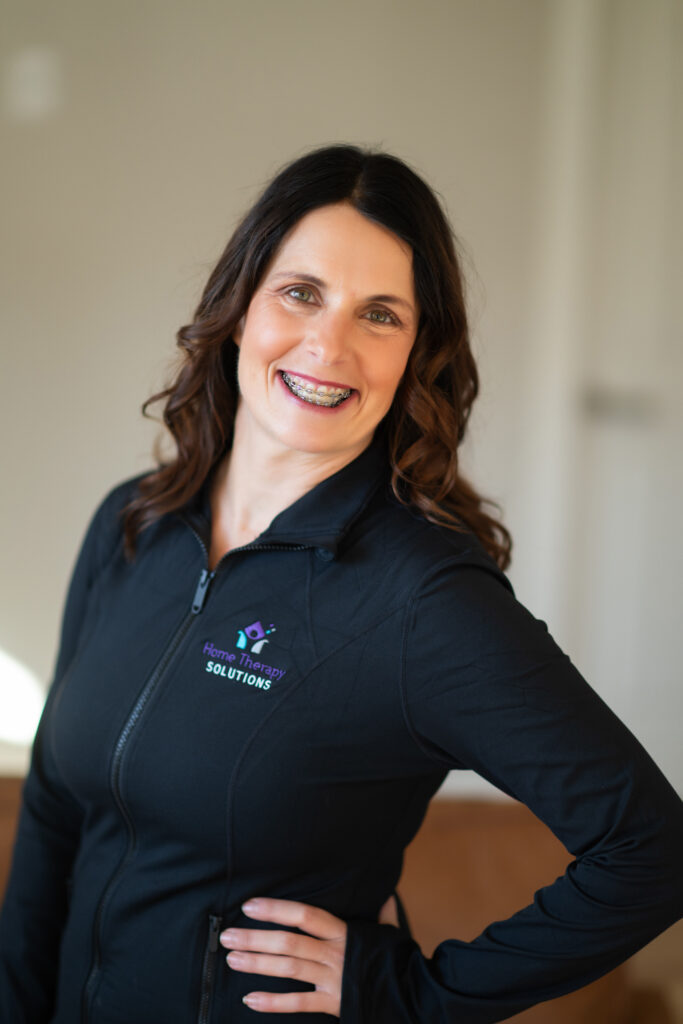
Kara Welke, OTD, OTR/L, CLT, is the founder and CEO of Home Therapy Solutions and creator of the Vital 8 Framework. She developed the framework to bring comprehensive, evidence-based healthy aging assessment and intervention to adults in midlife and beyond. Kara is actively involved in research and has presented on healthy aging locally, nationally, and internationally, including at the International Association of Gerontology and Geriatrics (IAGG), Home Therapy Solutions is the only therapy practice in the area recognized as an Age-Friendly Health System practice.
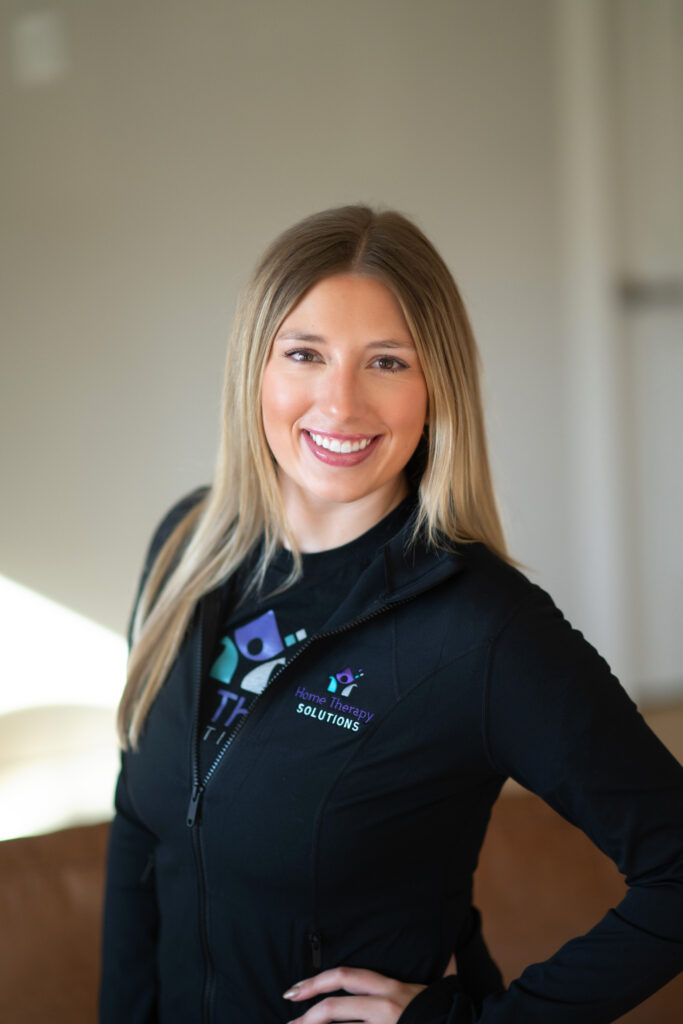
Jada Welke, OTD, co-developed the Vital 8 Framework during her doctoral capstone at the University of North Dakota, completed in collaboration with Home Therapy Solutions and UND’s Department of Geriatrics and their Dakota Geriatrics program. Her foundational work on the Vital 8 was accepted for presentation at both the Gerontological Society of America (GSA) and the American Geriatrics Society (AGS).