
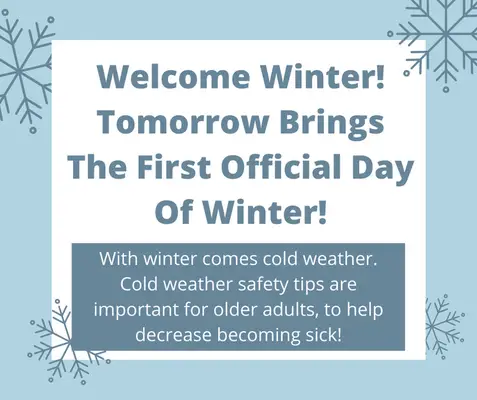
1. Keep warm inside:
Make sure your house isn’t losing heat through windows
When you go to sleep, wear warm clothes to bed
2. Bundle up on windy days:
Wear loose layers of clothing
Wear a waterproof coat or jacket
3. Illnesses may also make it harder for your body to stay warm:
Memory loss may cause someone to go outside without the right clothing
Diabetes can keep blood from flowing normally
4. Be aware of signs of hypothermia: acting sleepy, pale skin, puffy face, and cold feet and hands
5. Being active also helps increase your body heat; avoid staying stationary
6. Medication may also affect body heat. Make sure to talk to your primary care doctor prior to altering any of your medications.
For more detailed information on the cold weather tips listed above, visit: https://www.nia.nih.gov/…/cold-weather-safety-older-adults
Talk to Home Therapy Solutions TODAY! To discuss how we can come into your home, provide education and training on reducing falls, education on medication management, and provide exercises to keep your body active! https://hometherapysolutionsnd.com/
Resource for cold weather safety tips: https://www.nia.nih.gov/…/cold-weather-safety-older-adults