This post is part of our Vital 8 Healthy Aging Series — a blog series exploring the key areas of health that shape how well we age, and what we can do about them today.
Vital 8 Healthy Aging Series — Part 8
Author: Kara Welke, OTD, OTR/L, CLT
– Part 1: Body Battery / Grip Strength blog
– Part 2: Cognitive health blog
– Part 3: Pelvic floor blog
– Part 4: Balance blog
– Part 5: Sleep blog
– Part 6: Social isolation blog
– Part 7: Nutrition blog
A family spends $80,000 on a gorgeous bathroom remodel for their parents. Frameless glass doors. Glossy porcelain tile. A freestanding soaking tub with a high edge to climb over.
Six weeks later, their mother slips on the wet tile, breaks her hip, and never returns home.
The renovation looked beautiful. But no one asked whether it was safe.
This happens more often than people realize. And it is completely preventable — when the right professional is involved before the project starts, not after someone gets hurt.
Falls Are the Leading Cause of Injury Death in Older Adults — and Most Happen at Home
This is not a nursing home problem. The majority of serious falls happen inside the homes where people feel safest. And research now confirms what should have been obvious all along: home safety assessment should happen before a fall, not after one.
A 2026 meta-analysis of 10 randomized controlled trials found that preventative home hazard assessment and modification reduced fall incidence by 31% and medically attended falls by 41%. A separate 2024 review found that targeted modifications — grab bars, nonslip surfaces, improved lighting, marked stair edges — reduced home fall injuries by 40%.
These are not expensive renovations. They are small, strategic changes guided by a professional who knows what to look for. But the greatest impact comes from prevention, not reaction.
📞 Do not wait for a fall to find out your home is working against you. Call Home Therapy Solutions or book your Vital 8 Healthy Aging Assessment online→ Call us at (218) 230-2171 or you may book online to learn more.
Not All Home Assessments Are Created Equal
This is critical and something most people do not know: research consistently shows that home safety assessments produce the best outcomes when conducted by occupational therapy professionals specifically trained in home safety.
– A landmark study found that when home assessments were conducted by occupational therapists, fall rates dropped by 46% — significantly more than when the same type of assessment was done by other home care workers.
– The Home Hazard Removal Program (HARP), an evidence-based program developed by occupational therapy researchers, achieved a 38% reduction in fall rates in a randomized clinical trial. Our therapists are trained in the HARP program — the same methods proven effective in clinical research.
– The CAPABLE program — a partnership between an occupational therapist, nurse, and handyman — demonstrated a 30% reduction in disability among older adults. Participants went from difficulty with nearly four daily activities to just two. That is the difference between needing full-time help and living independently.
– An OT-led home safety program was found to be more effective at reducing falls than an exercise program alone — reinforcing that the environment matters as much as the person.
Who does your home assessment matters as much as whether you get one. A generic checklist from the internet is not the same as an evidence-based assessment by a trained occupational therapy professional.
The Modifications That Help — and the Ones That Hurt
Not every change to your home makes it safer. Some well-intentioned modifications actually accelerate decline.
A lift chair seems helpful — but it eliminates the need to use leg muscles to stand. Over time, the muscles weaken further. The same pattern happens with stairlifts, shower chairs introduced too early, and equipment added without proper assessment.
A beautiful renovation can create new hazards — slippery tile, glass enclosures with no grab points, raised thresholds, and vanities that block safe movement.
The right modification at the right time strengthens independence. The wrong one replaces function your body still needs to maintain.
This is exactly why a trained professional should guide these decisions — someone who understands not just the home, but the person living in it.
Why “My Home Is Fine” Is Usually Wrong
People adapt to their homes without realizing it. They stop using the stairs. They hold onto furniture when they walk. They avoid the bathtub. They stopped going into the basement years ago.
These are not preferences. They are compensations — and they signal that the environment is no longer supporting independence.
Here is what a trained therapist sees that you might not:
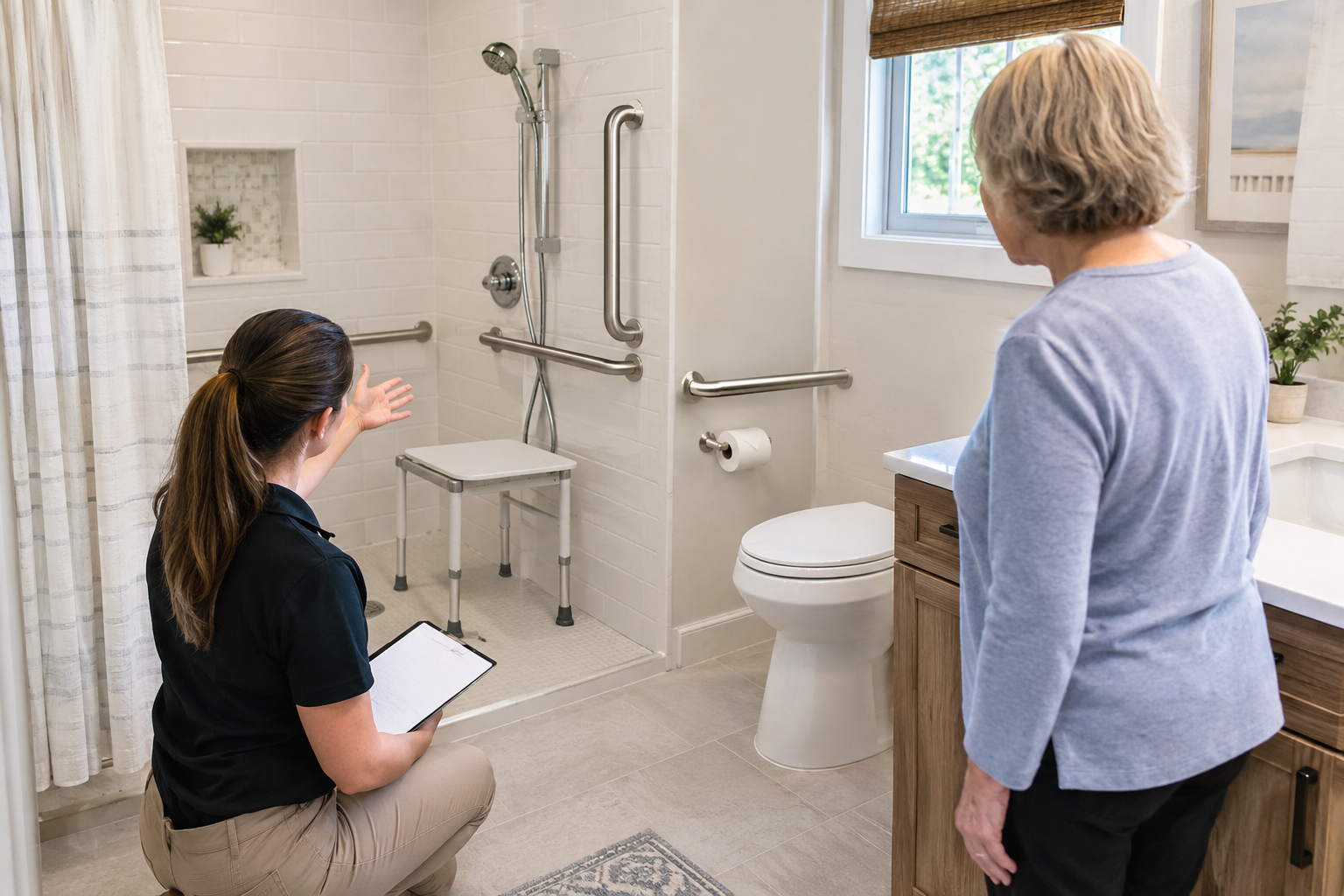
– Lighting that creates shadows and glare affecting depth perception
– Bathroom layouts requiring twisting, reaching, or stepping over a tub wall
– Rugs and thresholds creating tripping hazards
– Furniture placement blocking safe walking paths
– Stairways without handrails on both sides
– Kitchen setups requiring risky reaching or bending
– Entryways difficult to navigate with groceries, a walker, or in icy conditions
Your Home Is Only Half the Picture
Here is where most home safety programs stop — and where we go further.
A safe home means very little if you cannot get out of it.
When a person’s world shrinks — when they stop going to the store, the pharmacy, a friend’s house — the consequences extend far beyond inconvenience. A 2023 study found that each decline in life space was associated with a 59% increased odds of dementia over seven years. A 2025 study found the odds of cognitive impairment were 2.7 times higher for adults restricted to their home.
Think about what happens when someone stops getting out:
– Balance never gets challenged by uneven surfaces, curbs, or crowds
– Cognition loses the stimulation of navigating new environments
– Muscles do less work — strength and endurance decline
– Social isolation increases, raising risk for depression and cognitive decline
– Medication pickups, groceries, and appointments shift to delivery — removing even more reasons to move
A home assessment that does not also look at community mobility is only solving half the problem. Aging in place is not the same as aging in the right place. If your home is safe but you cannot — or have stopped — getting out into the community, the home may not be the right fit regardless.
📞 The Vital 8 looks at whether your entire environment — home and community — supports the life you want to live. Call Home Therapy Solutions → Call us at (218) 230-2171 or you may book online to learn more.
Home Modifications Reduce More Than Falls
The benefits extend well beyond fall prevention:
– Reduced caregiver burden: Home modifications reduced informal care hours by up to 46%
– Improved cognitive function: Participants showed significant improvements in memory, attention, and processing speed within six months of modifications
– Cost-effectiveness: Simple environmental changes led to greater improvements in daily activities compared to more expensive interventions
– Reduced facility-based care: Proactive modification delays or prevents transition to assisted living and nursing facilities — where costs average $11,000–$13,000 per month
Signs It Is Time for a Vital 8 Assessment
Environment safety is one of eight interconnected domains in our Vital 8 framework — because a grab bar will not help if the real issue is medication-related dizziness, and better lighting will not matter if cognition is declining. Consider a Vital 8 assessment if:
– ☐ You or a loved one is over 50
– ☐ There has been a fall, near-fall, or increasing unsteadiness
– ☐ Daily routines have shifted to avoid certain areas of the home
– ☐ Getting in and out of the home has become harder
– ☐ Community outings have decreased
– ☐ A new diagnosis has changed mobility, vision, or cognition
– ☐ You are planning a renovation and want to make it safe AND functional
– ☐ You want to stay in your home long-term and want a proactive plan
Research consistently shows that multidomain assessment and intervention produces better outcomes than addressing any single area alone. That is exactly why we built the Vital 8 — and why environment safety is one piece of a much bigger picture.
📞 Your home should support your future — not hold you back. Call Home Therapy Solutions at [phone] or book your Vital 8 Healthy Aging Assessment online → Call us at (218) 230-2171 or you may book online to learn more.
Assessments are available in your home or at our clinic at 1123 N 42nd St, Grand Forks, ND 58203. For adults 65 and older, home safety assessment and intervention may be covered by insurance when there is a skilled, medically necessary need. Proactive wellness assessments through the Vital 8 framework are available as private pay. If clinical concerns are identified during any assessment, follow-up treatment may also be covered.
FAQ
Online checklists identify obvious hazards. A professional assessment evaluates how you actually move through your space, integrates findings with your health across multiple domains, and provides personalized, evidence-based recommendations. Research shows OT-led assessments reduce falls by up to 46% — generic checklists have no such evidence.
No referral is needed for a private pay wellness assessment. If clinical concerns are identified, follow-up services may require a referral depending on insurance.
Especially then. Renovations made without clinical guidance sometimes create new risks. A brief assessment ensures your upgrades are working for you, not against you.
Absolutely. Home safety is about the interaction between the person and the environment — not the age of the building.
For adults 65 and older, home safety assessment and intervention may be covered by insurance when based on a skilled, medically necessary need. Proactive wellness assessments through the Vital 8 framework are typically private pay. If the assessment identifies clinical concerns, subsequent treatment may be covered depending on your plan and medical necessity.
About the Authors
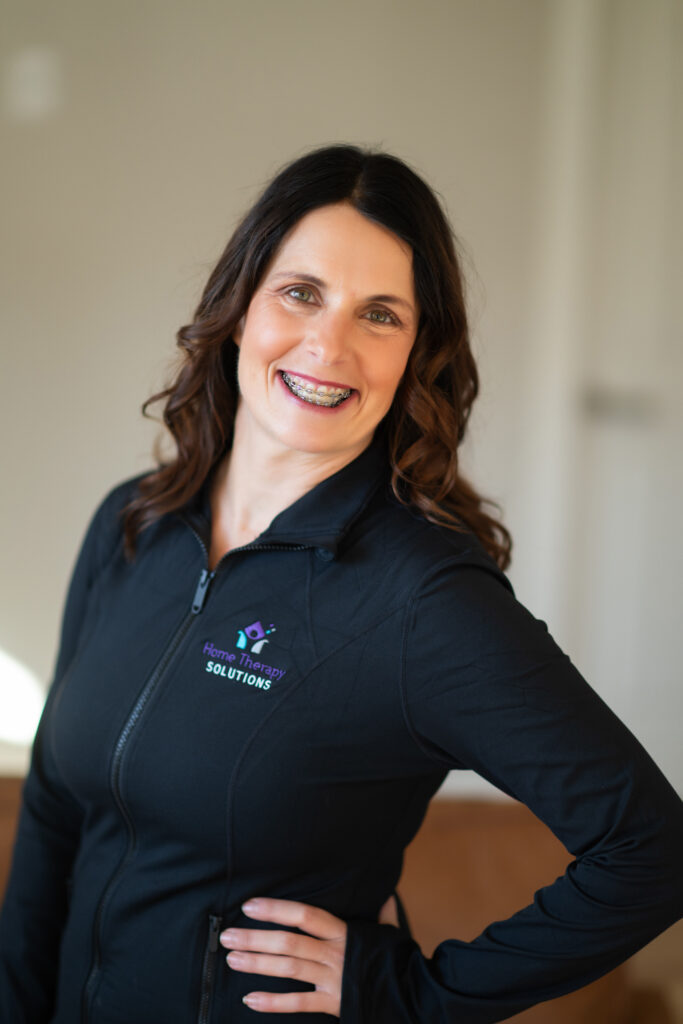
Kara Welke, OTD, OTR/L, CLT, is the founder and CEO of Home Therapy Solutions. She developed the Vital 8 Framework in collaboration with the University of North Dakota and Dakota Geriatrics to bring comprehensive, evidence-based healthy aging assessment and intervention to adults in midlife and beyond. The Vital 8 Framework has been accepted for presentation at the Gerontological Society of America, the American Geriatrics Society, and the International Association of Gerontology and Geriatrics. Kara presents locally, nationally, and internationally on healthy aging and is actively involved in aging-related research.

Jada Welke, OTD, OTR/L, contributed to the development of the Vital 8 Framework through her doctoral capstone research at the University of North Dakota, translating evidence-based aging research into a practical, multidimensional clinical toolkit.