

This post is part of our Vital 8 Healthy Aging Series — a blog series exploring the key areas of health that shape how well we age, and what we can do about them today.
Vital 8 Healthy Aging Series — Part 8
Author: Kara Welke, OTD, OTR/L, CLT and Jada Welke, OTD, OTR/L
– Part 1: How Strong Is Your Body Battery?
– Part 2: The Missing Checkup Your Brain Needs Now
– Part 3: The Core of Everything: Pelvic Floor Health
– Part 4: Beyond Standing on One Foot: Balance
– Part 5: The One-Third of Your Life That Determines the Other Two-Thirds: Sleep
– Part 6: The Silent Health Crisis No One Is Screening For: Social Connection
– Part 7: The Silent Connection Between What You Eat, Your Mouth, and How Well You Age
– Part 8: Medication Management ← You are here
One of our clients had 27 pill bottles on his kitchen counter. Every time he came home from the hospital, he had new ones. Some overlapped. Some were expired but still mixed in. Nobody had walked into his kitchen and actually looked at what was happening.
He was not careless. He was doing exactly what he was told.
A Confession Before We Start
Ask any of my providers — I am one of the worst offenders when it comes to medication management. Whether I am actually taking them, taking them at the right time, or remembering to refill — it is an ongoing conversation at every visit.
I share this because medication management is not an “older adult problem” or a “memory problem.” It is a human problem. If a healthcare professional who built a framework around this still struggles, imagine how many others are quietly doing the same.
My husband learned this the hard way. He was taking medications without water — just swallowing them dry. It caused significant throat issues requiring medical attention. Because nobody told him it mattered.
The Gap Nobody Sees From a Clinic Exam Room
Most medication reviews happen in a clinic: a provider pulls up a list, asks “are you still taking these?” and moves on. That visit might last 15 minutes total.
But medication management does not happen on a screen. It happens in kitchens and nightstands at 6 a.m. Research shows that 40% to 75% of community-dwelling adults are unable to fully adhere to their medication routines — and the reasons are often practical and environmental, not just cognitive.
It Is Not Just About Forgetting
Medication errors happen at every age. Forgetting is only one piece.
– Taking a medication that should be taken 30 minutes before food or drink — with morning coffee
– Taking a morning medication at bedtime, or vice versa
– Swallowing pills without water — risking throat and esophageal damage
– Crushing or splitting a slow-release pill
– Doubling up after a missed dose
Could you name every medication you take, what each one does, and exactly when and how to take it? Most people cannot. Many describe their pills by color — “the little white one” — but cannot name a single one.
That is not a failure of the individual. It is a gap in the system.
📞 Wondering if your medication routine is as safe as it should be? Call us or book your Vital 8 Healthy Aging Assessment → Call us at (218) 230-2171 or you may book online to learn more.
Polypharmacy Is Not Just an Older Adult Problem
Polypharmacy — typically five or more medications — is often discussed as a geriatric issue. It is not. By their 30s and 40s, many adults already manage prescriptions for anxiety, birth control, acid reflux, allergies, and sleep. Add blood pressure and cholesterol in the 50s, and the list grows quietly from there.
The issue is not age. It is accumulation. Each medication was prescribed for a reason. But together, they interact in ways difficult for any single provider to track — especially when prescriptions come from different specialists, urgent care visits, or hospital stays.
A large cohort study found polypharmacy was associated with a 60% increased risk of mortality and 49% increased risk of hospitalization at five years. The American Geriatrics Society publishes the Beers Criteria — a widely referenced list of medications warranting extra caution — because the risks compound as the list grows, regardless of when it started.

Common medication-related concerns at any age:
– Falls. Blood pressure medications, sleep aids, antidepressants, and antihistamines all increase fall risk — combined, it compounds
– Cognitive changes. Anticholinergic medications are linked to increased cognitive risk with long-term use
– Fatigue and weakness. Drowsiness and muscle weakness blamed on aging or stress — when they may be treatable side effects
– Nutritional impact. Some medications suppress appetite or interfere with nutrient absorption (Part 7)
– Sleep disruption. Many medications interfere with sleep quality (Part 5) — which affects everything else
Why Medication Must Be Part of a Comprehensive Aging Assessment
If you were building a complete picture of how someone is aging — looking at strength, cognition, balance, nutrition, sleep, social connection, and home safety — and you skipped medications, you would be missing one of the biggest pieces of the puzzle.
Medications affect every other domain. They affect cognition, balance, sleep, appetite, mood, energy, and fall risk. You cannot accurately interpret results in any of those areas without understanding what someone is taking, how they are taking it, and whether the medications themselves are contributing to the very problems being assessed.
This is exactly why the Vital 8 Framework includes medication management as one of eight core domains. And it is why the 4Ms Framework — the national Age-Friendly Health Systems initiative from the Institute for Healthcare Improvement — places Medication alongside What Matters, Mentation, and Mobility as a core priority. As a recognized Age-Friendly Therapy Practice, we align every assessment with these four priorities.
Research consistently supports multimodal assessment and intervention over single-domain screening for reducing inappropriate prescribing, improving adherence, and preventing adverse events. Assessing medications in isolation misses the interactions. Assessing everything else without medications misses the cause.
A Team Effort — And a Gap That Needs Filling
Doctors prescribe. Pharmacists dispense and counsel. Nurses educate. Each plays a critical role.
But there is a gap none of these roles are structured to fill: seeing how medication management actually happens in someone’s daily life, in their home.
Medication management is a recognized health management occupation — a core area of occupational therapy practice. Research strongly supports this:
– A randomized controlled trial found OT-led medication intervention had a moderate positive effect on adherence beyond standard care. Participants worked with an occupational therapist using motivational interviewing, individualized environmental supports, and strategies addressing cognitive and coordination limitations. Nearly 90% demonstrated a clinically meaningful decrease in HbA1c — a key marker of blood sugar control.
– The OT group initially showed a dip in adherence scores — because the intervention improved their ability to recognize when they were not adhering correctly. You cannot fix what you do not know is broken.
– A separate study found OT intervention led to twice as many new adaptive strategies for medication management compared to standard care.
This is not about replacing anyone on the care team. It is about filling a gap that currently exists — with approaches backed by research.
What We See at Home
When therapists walk into a home, they see what no clinic visit captures:
– Pill bottles scattered across three rooms with no system
– Expired medications mixed in with current ones
– Two bottles of the same medication under different names
– Medications stored where heat and humidity degrade them
– A spouse quietly managing everything — with no backup plan
– Someone who knows their pills by color but cannot name one
When barriers are identified, intervention is practical: reorganizing storage, simplifying routines, addressing cognitive or coordination limitations, setting up reminder systems, and coordinating with physicians, NPs, and pharmacists.
We do not prescribe or change medications. We assess function, identify risks, solve practical problems, and coordinate with the care team.
The Domino Effect
A blood pressure medication causes dizziness → balance worsens → a fall → confidence drops → activity decreases → muscles weaken → isolation increases → cognition declines → medication management gets harder → another hospitalization.
Was that a fall problem? A balance problem? A medication problem?
It was all of them. You cannot know unless you assess across domains.
Starting in Midlife — Not After the Crisis
Most people do not think about medication management assessment until something goes wrong. But by midlife, most adults are already managing multiple medications, and the habits that lead to problems later are forming now.
Catching these patterns early — before the list grows and before cognitive changes make management harder — dramatically reduces risk. The Vital 8 assessment is designed to catch exactly these patterns, across all eight domains, before they become a crisis.
📞 Ready to see the full picture? Call Home Therapy Solutions or book your Vital 8 Healthy Aging Assessment online → Call us at (218) 230-2171 or you may book online to learn more.
Assessments are available in your home or at our clinic at 1123 N 42nd St, Grand Forks, ND 58203. Call us to learn more about coverage options.
FAQ
Medication management is a recognized area of occupational therapy backed by randomized controlled trials showing improved adherence and health outcomes. We assess how you manage medications in your daily routine — something clinic visits cannot capture. We work alongside your doctor and pharmacist, not instead of them.
An evidence-based list from the American Geriatrics Society identifying medications that may need extra caution. Publicly available and useful to review with your prescriber.
No. Only your prescribing provider can change medications. We identify risks, organize findings, and coordinate with your care team.
Absolutely. Polypharmacy builds over time, and the habits you form now set the foundation for decades ahead. Problems do not start at 65. They start whenever nobody is paying attention.
About the Authors
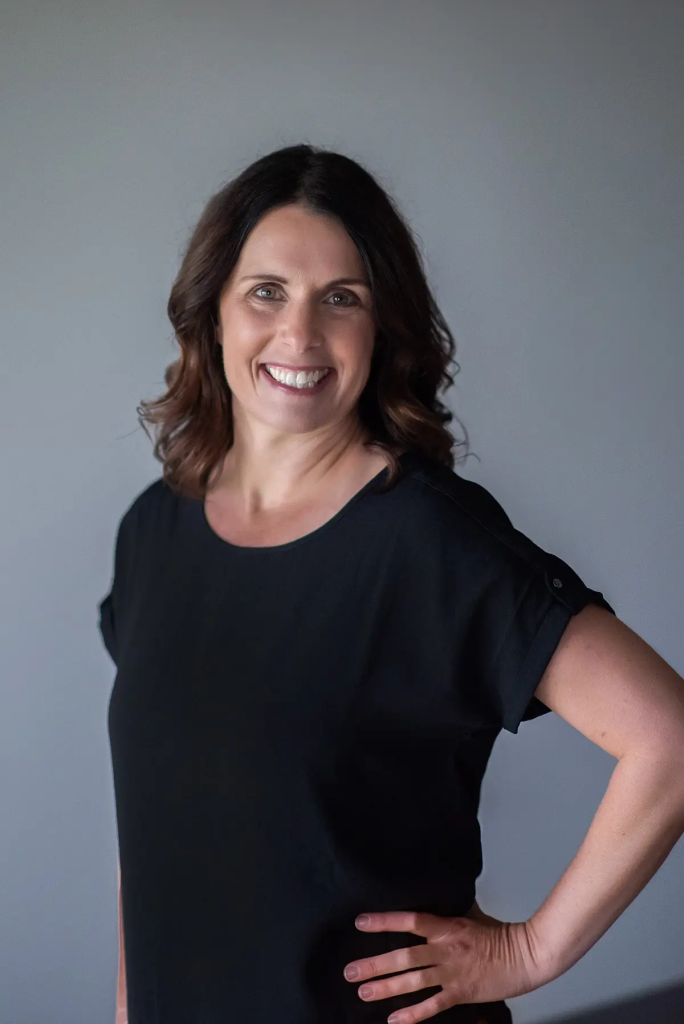
Kara Welke, OTD, OTR/L, CLT, is the founder and CEO of Home Therapy Solutions and creator of the Vital 8 Healthy Aging Framework. She presents nationally and internationally on proactive aging, including the International Association of Gerontology and Geriatrics (IAGG), and is actively involved in aging-related research — and freely admits she is still working on her own medication habits.